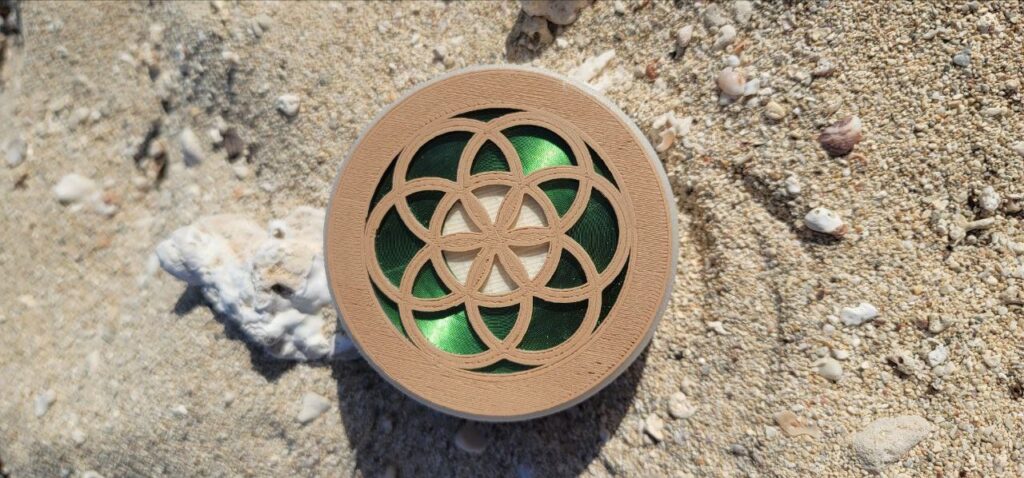
ARC-1 — Experimental Bioelectromagnetic System
Important Notice
This material is provided strictly for research and educational purposes. ARC-1 is not a certified medical device and is not intended to diagnose, treat, cure, or prevent any disease. The observations described below are experimental in nature and have not been confirmed by clinical studies.

ARC-1 Concept
ARC-1 is an experimental device designed to explore the possible interaction between pulsed electrical/electromagnetic signals and liquid biological media.
The project is based on the hypothesis that certain signal patterns may temporarily influence the distribution and behavior of microscopic particles in fluids, including cellular structures.
The device generates a series of short pulses with specific waveform and frequency characteristics intended for studying signal interaction with biological systems.
Project Background
The idea for ARC-1 emerged in 2021 during work on another electronic device. During experiments, unusual subjective effects were noticed, which led to further investigation into the possible influence of pulsed signals on biological processes.
Following this, a series of observations were conducted using blood sample microscopy and different signal-generation modes.
Observations and Experiments
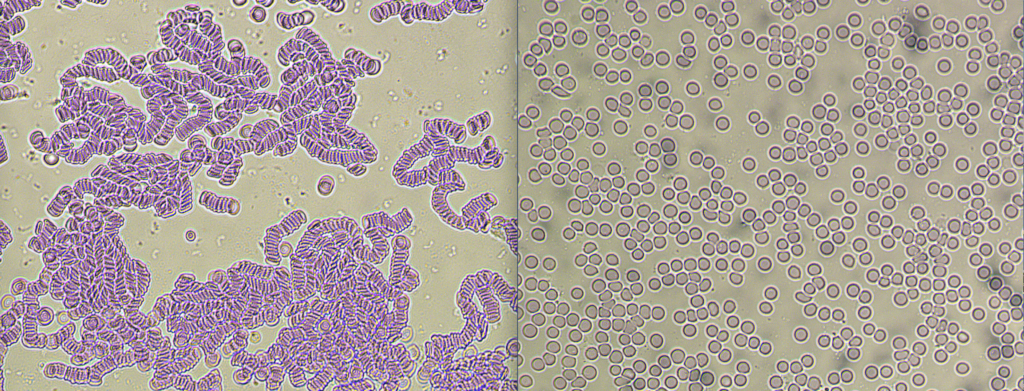
During the experiments, microscopic images of blood samples were obtained before and after signal exposure.
In some cases, visible changes in the relative distribution of red blood cells were observed. These observations are preliminary and require further investigation under controlled laboratory conditions.
At this stage, no medical conclusions can be made regarding the nature or cause of the observed effects.
In the first photo, you can see blood before using ARC-1: red blood cells have clumped together in “coin stacks” (a symptom of thick blood).
In the second photo, 10 minutes after using ARC-1, the red blood cells have separated and move individually, showing a clear thinning effect.
Thick blood can increase the risk of strokes, blood clots, and put extra strain on the heart. Currently, this problem is mostly addressed with medication, which not all people can or want to take.
Operating Principle
ARC-1 uses pulsed signal generation with adjustable parameters such as:
- frequency,
- pulse duration,
- duty cycle,
- waveform edge characteristics.
The project explores whether such signals may influence the physical behavior of liquid media and cellular structures.
Unlike static magnetic fields, ARC-1 operates using dynamic pulsed modes intended for studying a broader range of interactions.
Research Hypothesis
One of the working hypotheses is that pulsed signals may temporarily influence the interaction behavior between cells suspended in liquid media.
At this time, this hypothesis remains experimental and requires independent scientific verification.
Technical Specifications
Device dimensions:
- Diameter: 80 mm
- Height: 25 mm
- Weight: 70 g
Power:
- USB rechargeable
- Charging time: approximately 30 minutes
- Operating time: up to 5 hours
Indicators:
White indicator — active mode
Red indicator — charging
Blue indicator — ready
Instructions for Use
- Connect the device to USB power for charging.
- Wait until charging is complete.
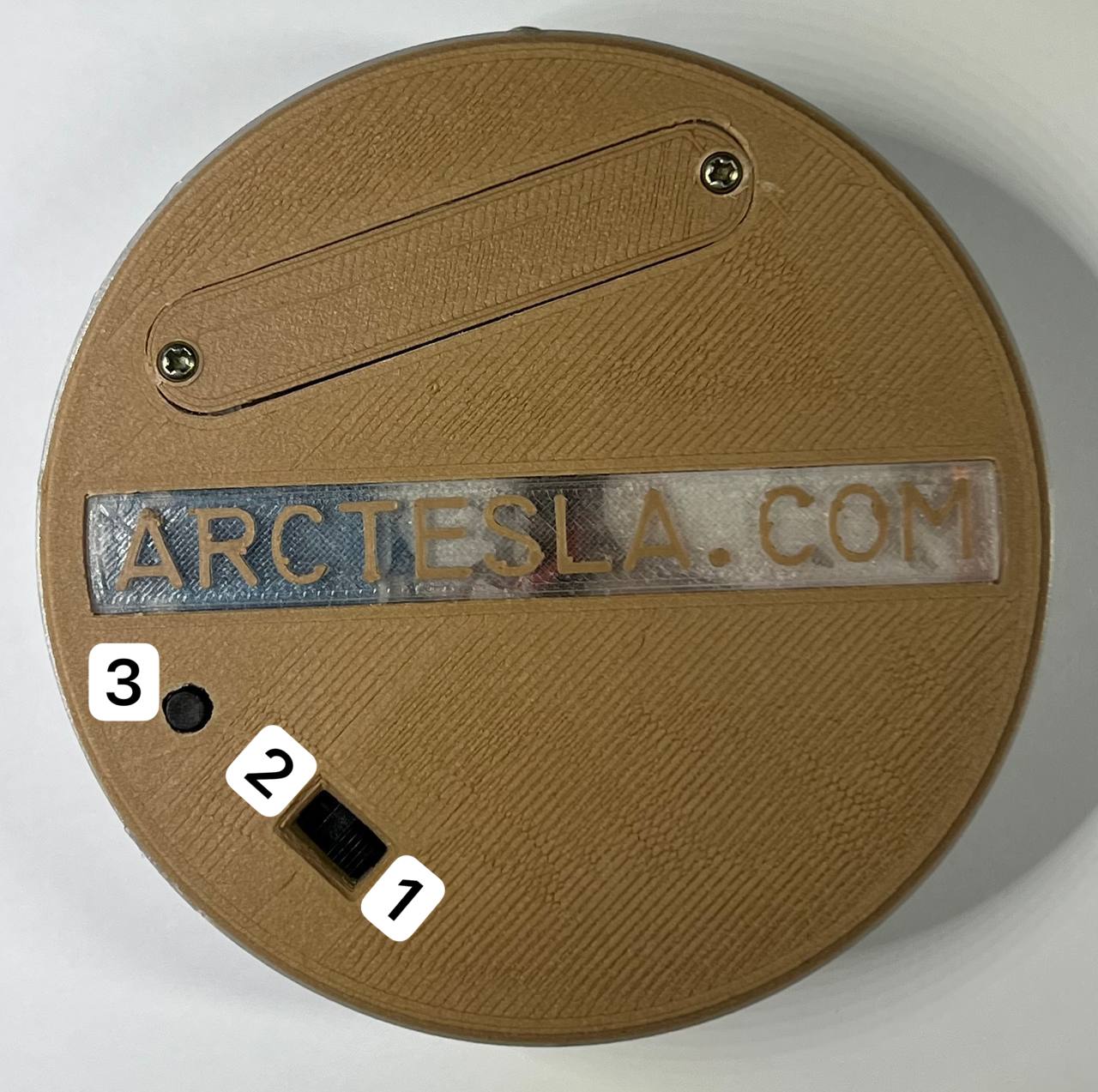
- To turn on the device, move the switch from position 1 to position 2, then briefly press button 3.
- The white indicator will illuminate when the device is active.
- Use the device for experimental and research purposes only.
Conclusion
ARC-1 is an independent experimental project in the field of pulsed electronics and bioelectromagnetic interactions.
The project does not claim medical effectiveness and should be considered solely as an experimental research platform for further investigation.
I hope this guide was helpful!